The Strategic Approach to Japan in Late Autumn
As the calendar turns toward November, Japan undergoes a profound transformation. The vibrant colors of autumn leaves begin to yield to the first crisp signals of winter, particularly in the northern regions and higher elevations. For the traveler, this transition period—roughly late October through November—requires a departure from the generic “holiday” planning mindset. Instead, it demands a strategic approach that balances Japan’s unique cultural landscape with the inherent unpredictability of shifting weather patterns. Whether you are planning a city-focused cultural trip or an outdoor adventure, the success of your journey depends on your ability to integrate safety protocols, local etiquette, and seasonal logistics into a cohesive plan.
This guide provides a framework for navigating this seasonal shift, ensuring that your itinerary remains both flexible and respectful. As with all outdoor planning, remember that Weather Windows Are Not Guarantees; your itinerary should always include contingencies for changing conditions.
Weather, Safety, and Proactive Monitoring
The first step in any strategic Japan itinerary is establishing a baseline for safety. Japan’s geography, while stunning, is subject to seismic and volcanic activity, as well as seasonal weather events. Rather than viewing safety as a reactive measure, integrate it into your daily planning routine. The Japan National Tourism Organization (JNTO) Safe Travel Information page is an essential resource that should be bookmarked before you even book your flights. It provides real-time updates on earthquake thresholds, tsunami warnings, and volcanic alert levels.
Proactive monitoring means checking these resources not just when you arrive, but as you build your itinerary. If you are traveling to mountainous regions or volcanic areas, understand the alert levels provided by the Japan Meteorological Agency. A level 2 or 3 alert, for instance, dictates access restrictions that can instantly derail a rigid plan. By checking these sources daily, you can adjust your transit or destination choices before you are mid-transit, allowing you to pivot to areas where facilities are operating as usual. This level of preparation is the hallmark of a seasoned traveler who respects the environment and their own safety.
Cultural Etiquette: The Foundation of Mindful Exploration
Beyond physical safety, navigating the social landscape of Japan requires an understanding of cultural expectations. According to the Japan National Tourism Organization’s guide on Japanese Customs and Etiquette, the core of local social interaction is the avoidance of inconvenience to others. This is not a suggestion; it is the fundamental rhythm of daily life. When you enter a space—whether a hotel, a restaurant, or a public transit hub—your behavior should reflect this awareness.
The Indoor-Outdoor Transition
As temperatures drop in late autumn, the transition between indoor and outdoor spaces becomes more frequent. You will encounter situations requiring you to remove your shoes, such as entering traditional hotels, specific attractions, or even some restaurants. Always look for signs, observe the footwear of those around you, and be prepared to manage your belongings efficiently. This is a moment where preparation pays off: wearing shoes that are easy to remove and put on will save you time and help you maintain the flow of the space.
Dining and Financial Etiquette
Dining in Japan is a curated experience, often involving fresh, seasonal ingredients. If you make a reservation, honor it. In smaller establishments, ingredients are often purchased specifically for your booking. If you fail to show up, you are not just missing a meal; you are causing a tangible loss to the business. Furthermore, be aware of “table charges” at venues like izakaya (gastropubs). This is a standard practice, often accompanied by a small appetizer. It is not a hidden fee, but a cultural norm. Understanding these nuances before you walk through the door prevents confusion and demonstrates respect for the establishment.
Planning Seasonal Activity: Hiking vs. Winter Sports
The late autumn and early winter period is a distinct “shoulder season” for outdoor activities in Japan. The JNTO Sports & Outdoor guide highlights the diverse recreational landscape available, but the viability of these activities depends heavily on your specific location and the current weather window. Japan is a hiker’s paradise, but as the season shifts, the accessibility of mountain trails changes rapidly. If you are planning a hike, you must evaluate the route based on the day you have, not the day you hope for. As outlined in our guide on How to Choose a Hike for the Day You Actually Have, matching your physical capability and the current trail conditions is critical.
If your interests lean toward winter sports, the early season can be unpredictable. While Japan is famous for its pristine powder snow, the timing of the first significant snowfall varies by region. When planning, do not assume that a resort is fully operational simply because it is winter. Research the specific mountain region, monitor local snowfall reports, and prioritize destinations that offer flexible, multi-activity options. This allows you to pivot from a planned ski day to a cultural or city-based activity if the weather does not cooperate.
Strategic Checklist for the Seasonal Traveler
- Bookmark Safety Portals: Keep the JNTO Safe Travel page accessible on your mobile device at all times.
- Observe and Mimic: In queues, transit, and restaurants, observe the local behavior for 30 seconds before acting.
- Confirm, Don’t Assume: Always verify restaurant reservation policies, especially regarding cancellations.
- Layer for Transitions: Pack clothing that is easy to adjust, as you will be moving between heated interiors and cold exteriors frequently.
- Respect the Environment: Carry a small bag for your trash, as public bins are not always available.
Note: This research-based guide was prepared with AI assistance. No site visit or hands-on test was conducted for this article.
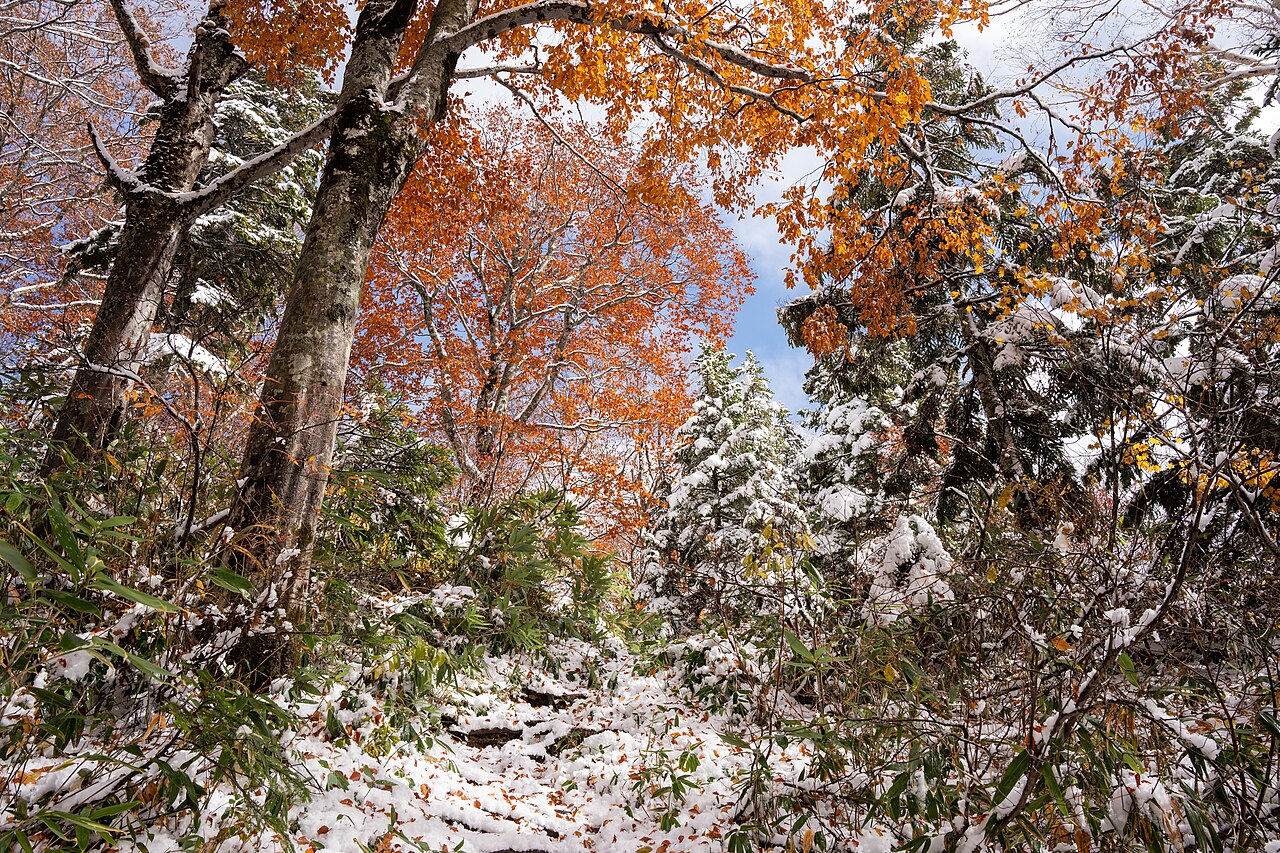
Representative photo showing the visual transition from autumn to winter, illustrating the unpredictable weather conditions travelers must prepare for during Japan’s seasonal shift. Photo: Raita Futo from Tokyo, Japan / Wikimedia Commons · CC BY 2.0. Resized for display. Sources checked October 23, 2026.