Travel planning for the upcoming holiday season requires a heightened level of logistical coordination, particularly for travelers with accessibility needs. Navigating the transition between different modes of transport—such as moving from an airport to a rail station or a national park—demands a proactive audit of policies and requirements. This guide offers a research-based framework for managing these transitions effectively, ensuring that your itinerary accounts for the specific operational realities of various travel providers.
Note: This guide is a research-based resource prepared with AI assistance. No site visits, hands-on tests, or interviews were conducted in the preparation of this material. All information is derived from current public documentation provided by the relevant agencies as of November 2026.
Aligning Transit Protocols: Air and Rail
The most common point of friction in multi-modal travel is the disparity between screening requirements at airports and boarding procedures on rail lines. Travelers should treat these as distinct, sequential audits. According to the Transportation Security Administration (TSA), passengers should arrive at the airport with ample time for all journey steps, including parking and security. For those traveling with medical devices, such as insulin pumps or glucose monitors, it is critical to notify officers of the device’s location before the screening process begins. While not required, providing a notification card can discreetly communicate medical conditions. If you prefer to avoid advanced imaging technology, you may request a pat-down by an officer of the same gender or ask for private screening.
Conversely, rail travel, such as service provided by Amtrak, operates under different accessibility parameters. Reservations for accessible space are often required in advance. It is essential to distinguish between ‘accessible seats’—which are designed as transfer seats with extra room—and ‘wheelchair spaces,’ where a passenger may remain in their device. Unlike airport security, where you must declare medical liquids exceeding 3.4 ounces at the start of the screening process, rail travel allows for different, often more flexible, arrangements regarding oxygen equipment and mobility devices. Reviewing the specific guidelines for your chosen carrier, including lift-equipped bus connections, is a necessary step in your pre-departure checklist. For further reading, see Mastering Accessible Travel: A Strategic Planning Guide.
Managing Public Accommodations and Service Standards
Once you arrive at your destination, the legal framework governing accessibility shifts to the Americans with Disabilities Act (ADA). Under Title III, businesses that serve the public, including hotels, restaurants, and shops, are required to provide people with disabilities an equal opportunity to access goods and services. As outlined by ADA.gov, this includes making ‘reasonable modifications’ to policies, practices, and procedures. A common example is the accommodation of service animals, even in establishments that maintain a ‘no pets’ policy.
When auditing your destination, understand that the standard for ‘barrier removal’—such as installing ramps or rearranging furniture to clear aisles—is based on what is ‘readily achievable’ given the business’s size and resources. This means that while a large hotel chain may have more extensive accessible infrastructure, smaller or older properties may have different limitations. Before booking, verify specific room features and confirm whether accessible seating is available via online booking tools, as some venues may incorrectly require phone calls for these requests. For more on this, see Planning Accessible Holiday Travel: A Proactive Guide.
Site-Specific Logistics: National Parks and Outdoor Spaces
For itineraries that include outdoor destinations, the planning process must shift again to focus on the Architectural Barriers Act (ABA) and agency-specific policies. The National Park Service, for instance, maintains specific accessibility sections on individual park websites. As noted by the U.S. National Park Service, the Access Pass is a vital tool for U.S. citizens or permanent residents with a medically determined permanent disability, providing free entrance to federal lands that charge an entrance fee.
When planning an outdoor excursion, do not assume that ‘accessible’ implies the same level of infrastructure found in a city center. Each park is responsible for its own accessibility details, such as whether wheelchairs are available to borrow or what camping options are truly step-free. Before you depart, use the following checklist to ensure your planning is robust:
- Transit Buffer: Add at least 60-90 minutes to your transition time between modes (e.g., train station to hotel) to account for potential delays in lift-equipped transport or shuttle availability.
- Documentation: Keep all medical documentation, device specifications, and reservation confirmations for accessible seating in an offline folder or printed format.
- Direct Communication: If a website is unclear about accessibility, contact the specific facility directly. For national parks, use the park-specific email or contact form provided on their individual site pages.
- Equipment Verification: If traveling with a powered mobility device, verify the specific weight and dimension requirements for both air and rail transit, as these can differ significantly.
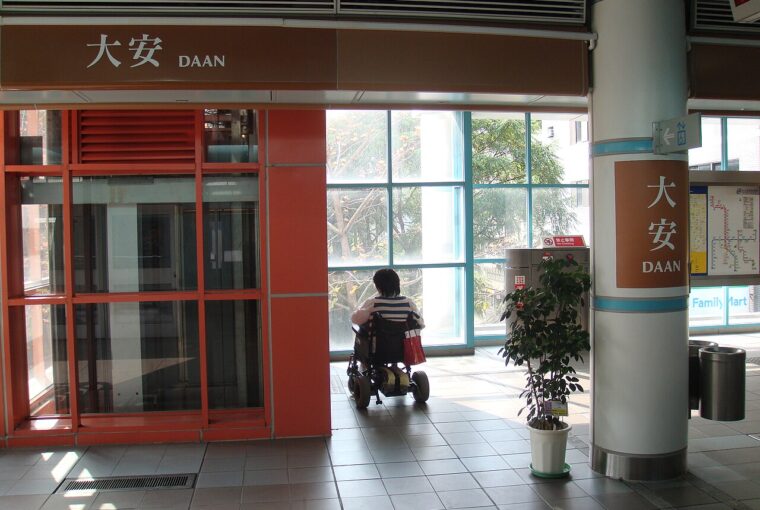
Representative photo showing modern rail infrastructure, highlighting the importance of verifying accessible boarding and transfer facilities when planning multi-modal trips. Photo: ZemplinTemplar / Wikimedia Commons · CC BY-SA 4.0. Resized for display. Sources checked November 6, 2026.
Advertisement · From our publishing familyDiscover something new ↗