In the evolving landscape of travel, the act of booking a hotel has transitioned from a simple transaction into a complex exercise in consumer due diligence. As of May 2025, the regulatory environment surrounding short-term lodging has fundamentally shifted, empowering travelers with new protections against deceptive pricing. However, the responsibility to verify these standards—and to ensure that accessibility claims align with reality—remains with the traveler. This guide provides a strategic framework for auditing your next hotel booking, ensuring both price transparency and functional accessibility.
Auditing Total Price Transparency
The Federal Trade Commission’s (FTC) Rule on Unfair or Deceptive Fees (16 C.F.R. Part 464) has significantly altered how hotels must display costs. Since May 12, 2025, any business offering short-term lodging must disclose the total price upfront if they include pricing information in their advertisements. This means that mandatory fees—such as resort fees, cleaning fees, or mandatory service charges—can no longer be obscured or added as a surprise at the final checkout screen. For a deeper dive into the nuances of booking, see our guide on Navigating Transparent Hotel Stays.
When auditing a property’s pricing, the traveler must distinguish between mandatory and optional fees. According to the FTC’s guidance on the Rule, businesses may only exclude three specific categories from the total price: government charges (taxes), shipping charges, and fees for optional ancillary goods or services that the consumer explicitly chooses to add. If a property requires a fee for facilities, towels, or other amenities that a reasonable consumer would expect to be part of the stay, that fee must be baked into the total price displayed upfront.
A strategic audit involves checking the booking engine’s math. If you see a nightly rate of $200 and a ‘mandatory resort fee’ of $40, the total price displayed must be $240. If the site displays $200 and adds the $40 fee only at the final payment step, the property is likely in violation of the current Rule. As noted in our previous analysis, A Traveler’s Framework for Transparent Hotel Bookings highlights the intersection of cost and access.
Verifying Accessibility Beyond the Booking Engine
While price transparency has clear regulatory guardrails, accessibility remains a nuanced area that requires proactive verification. The Americans with Disabilities Act (ADA) applies to almost all businesses that serve the public, including hotels and motels. Under Title III of the ADA, businesses must provide equal opportunity to access goods and services, which includes making reasonable modifications to policies and removing architectural barriers where it is ‘readily achievable.’
However, ‘readily achievable’ is a standard based on a business’s size and resources, meaning not every historic property can be retrofitted to the same degree as a new build. To conduct an accessibility audit before booking, travelers should not rely solely on a website’s ‘accessible room’ checkbox. Instead, use the following framework based on ADA.gov guidance:
- Verify the Route: An accessible room is only useful if the path to it is accessible. Ask the property for details on the route from the lobby to the room, including elevator access and doorway widths.
- Clarify ‘Reasonable Modifications’: If you have specific needs regarding service animals or mobility devices, communicate these before arrival. Under the ADA, businesses must make reasonable modifications to policies, such as allowing a service animal in a ‘no pets’ facility.
- Measure the Bathroom: If the website lacks specific measurements, contact the property directly. Look for details on grab bar placement, roll-in shower configurations, and sink height.
The Pre-Booking Audit Checklist
Before confirming a reservation, utilize this audit checklist to ensure the property meets your requirements for both financial and physical access. This systematic approach reduces the likelihood of encountering unexpected costs or physical barriers upon arrival.
| Audit Category | Verification Goal |
|---|---|
| Total Price | Confirm that all mandatory fees are included in the advertised total price. |
| Fee Disclosure | Ensure any excluded charges (taxes/optional items) are clearly disclosed before payment. |
| Physical Access | Verify that the route to the room and main amenities are free of architectural barriers. |
| Policy Alignment | Confirm that the hotel’s policies regarding service animals or mobility aids align with ADA standards. |
By applying these audit steps, you move beyond passive consumption and into a position of informed decision-making. The current regulatory environment provides the tools for transparency, but it is the traveler’s consistent application of these standards that enforces them in practice.
Note: This guide was prepared with the assistance of AI and is based on publicly available regulatory information. No site visits or hands-on testing were conducted for this article. Travelers should always verify specific hotel policies and accessibility features directly with the property management before booking.
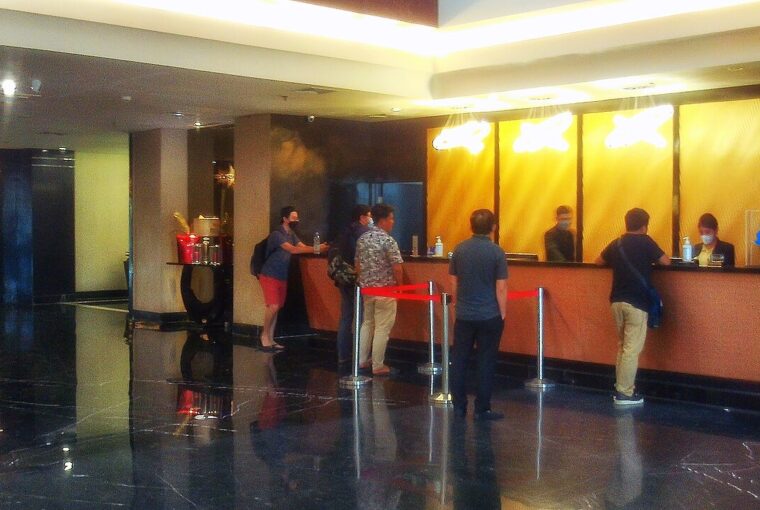
Representative photo. Hotel corridors and common areas are key points of inspection during an accessibility audit to ensure pathways are clear and navigable. Photo: Basile Morin / Wikimedia Commons · CC BY-SA 4.0. Resized for display. Sources checked November 5, 2026.
Advertisement · From our publishing familyDiscover something new ↗