Note: This research-based guide was prepared with AI assistance. No site visits, firsthand interviews, or hands-on testing were conducted at any airport or security checkpoint. All procedural information is derived from official Transportation Security Administration (TSA) guidelines current as of October 2026.
For families, the airport transit experience is often the most significant hurdle of a trip. Moving through security checkpoints with children requires more than just arriving early; it demands a proactive, research-based strategy to manage gear, documentation, and the screening process itself. By understanding the specific protocols set by the Transportation Security Administration (TSA), families can reduce stress and ensure a smoother departure that sets the tone for the entire journey. Treating the security checkpoint as a managed part of your itinerary, rather than an unpredictable obstacle, allows for a more controlled and predictable experience.
The Logistics of Liquid Nutrition and Medical Needs
One of the most frequent sources of confusion for traveling parents involves the liquid rules. While the standard 3.4-ounce (100 ml) rule applies to most passengers, there is a distinct, well-defined exception for parents traveling with infants and toddlers. According to official TSA guidelines, formula, breast milk, toddler drinks, and baby food (including puree pouches) are classified as medically necessary liquids. These items are permitted in carry-on bags in quantities exceeding 3.4 ounces.
Crucially, you do not need to pack these items in a quart-sized bag, and your child does not need to be present for you to transport breast milk. Cooling accessories, such as ice packs, freezer packs, and gel packs, are also permitted regardless of whether breast milk is present. To ensure a seamless experience, inform the TSA officer at the start of the screening process that you are carrying these items. Be prepared to remove them from your carry-on for separate screening. While TSA may test these liquids for prohibited items, they will not immerse anything into the liquid, and you may request private screening if you prefer. This is a critical distinction to manage, as the anxiety of “what can I bring” often leads to over-packing in checked luggage, which can complicate your arrival at the destination.
When planning your departure, consider how your gear integrates with your overall packing system, as detailed in our guide on A Carry-On System for Traveling With Children. Furthermore, remember that the stress of the airport can impact the rest of your trip, so Building Rest Into a Family Itinerary is a crucial step for long-term travel success.
Navigating the Screening Checkpoint with Children
The screening process varies by age, and knowing what to expect can prevent unnecessary delays. Children 12 and under are generally allowed to leave their shoes, light jackets, and headwear on during screening. If you are using Advanced Imaging Technology (AIT), light jackets must be removed and placed on the X-ray belt. For families concerned about the process, TSA travel tips emphasize that children will not be separated from their parents or guardians during screening. This policy is designed to maintain family unity during what can be an intimidating process for younger travelers.
When moving through a walk-through metal detector, infants may be carried in a sling or carrier. If a child is able to walk, they may proceed through the metal detector separately. Should an alarm sound, TSA officers are trained to allow multiple passes through screening technologies to resolve the alarm, which helps reduce the need for a pat-down. If your child has a medical condition or disability, you can contact TSA Cares at (855) 787-2227 at least 72 hours prior to your travel to request assistance at the checkpoint. This service provides a significant buffer of confidence for families navigating complex medical equipment or sensory-sensitive needs, ensuring that you have an advocate before you even reach the airport.
Operationalizing the Pre-Departure Workflow
Beyond the checkpoint, a successful family trip relies on a robust packing strategy that accounts for the gear you are bringing. Consider the following steps to ensure your equipment is ready for inspection:
- Start with an Empty Bag: Begin packing with an empty bag to ensure no prohibited items are hiding in forgotten pockets or compartments. This reduces the likelihood of alarms and delays.
- Screening Gear: Strollers, umbrella-strollers, baby carriers, car seats, and booster seats must be screened by X-ray. Place items in the stroller pockets or baskets, in a carry-on bag, or directly on the X-ray belt. If an item is too large for the X-ray machine, it will undergo a visual or physical inspection by a TSA officer.
- Gift Prep: If you are traveling with gifts, use gift bags or boxes with lids rather than wrapping them. This allows officers to inspect contents without destroying your hard work.
- Document Readiness: Keep your identification and boarding passes easily accessible. For children, while they may not need photo ID for domestic flights, having necessary documentation ready for the entire traveling party streamlines the initial checkpoint entrance.
- Use Technology: If you find yourself waiting in a queue, use that time to remove items from your pockets and organize your carry-on, ensuring you are ready to move quickly once you reach the belt.
By treating the security checkpoint as a managed part of your itinerary rather than an unpredictable obstacle, you can maintain a sense of calm. Whether you are heading to a national park, as suggested by resources like the National Park Service’s programs for families, or a city break, preparation is the key to minimizing friction. Remember that TSA officers are there to facilitate safety; if you have concerns or questions, asking before the screening begins is always the preferred approach. The goal is to reach your gate with enough time to manage your children’s needs, rather than rushing through the terminal, which often leads to forgotten items and heightened stress levels for everyone involved.
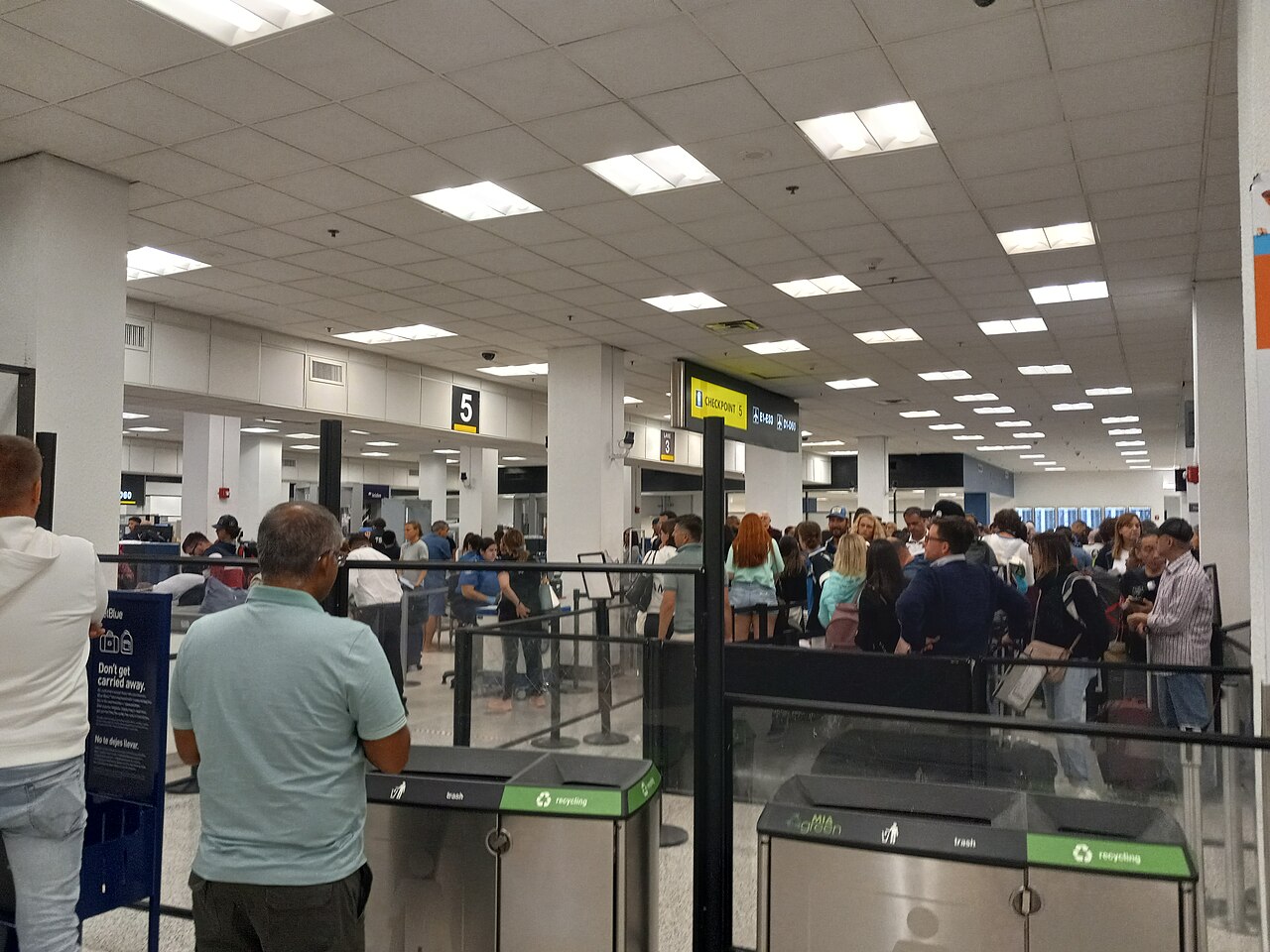
Representative photo showing the typical environment of an airport security checkpoint, illustrating the setting where families must navigate TSA procedures. Photo: FunctioningMemberOfSociety / Wikimedia Commons · CC BY 4.0. Resized for display. Sources checked October 24, 2026.