Note: This guide was prepared with AI assistance based on research of public tourism data and official guidance. No physical visit or hands-on testing was conducted.
November in Kyoto represents a distinct shift in both landscape and logistics. As the autumn foliage reaches its peak, the city experiences a convergence of cultural events and heightened visitor traffic. For the traveler, this season requires more than a simple itinerary; it demands a strategic approach to time, space, and local etiquette. By moving beyond the conventional “must-see” lists and adopting a framework built on transit geography and local seasonal calendars, one can experience the ancient capital with greater clarity and less friction.
The Seasonal Calendar as a Planning Framework
Rather than treating November as a single block of time, effective planning requires mapping the specific, often fleeting, events that define the month. According to the Kyoto City Official Guide, November is characterized by a high concentration of traditional events, such as the Autumn Dance Performances by Maiko and Geiko, which run through mid-November, and various fire festivals. These events are not merely spectacles; they are structural anchors for a daily schedule.
When building an itinerary, treat these events as the primary “fixed” points. Because these performances and festivals occur at specific times and venues, they dictate the flow of the day. A strategic plan involves identifying one anchor event per day and building the rest of the schedule around the transit required to reach that venue. This prevents the common error of over-scheduling, where a traveler attempts to visit multiple high-traffic landmarks in a single afternoon, only to be delayed by the logistical realities of peak-season crowds.
Spatial Strategy: Applying Transit Geography
One of the most effective ways to manage a trip to a high-density destination like Kyoto is to apply the principles of transit geography to reduce daily backtracking. The city is often approached as a single entity, but it is better understood as a collection of distinct areas, each with its own character and logistical requirements. The Kyoto City Official Guide highlights areas like the Yamashina and Ohara regions as “hidden gems” that offer a reprieve from the central city’s intensity.
A resilient itinerary prioritizes one geographic zone per day. For example, focusing a full day on the Yamashina area—known for its temples and historical significance—allows the traveler to immerse themselves in a specific context without the fatigue of constant transit back and forth across the city. This spatial discipline is particularly relevant in November, when the sheer volume of movement can turn a short commute into a significant time-sink. By staying within a single sector, you not only reduce your carbon footprint and travel time but also gain a more nuanced understanding of that specific neighborhood’s rhythm.
The Architecture of Responsible Tourism
Kyoto’s status as a living city, rather than an open-air museum, necessitates a high degree of mindfulness. The Kyoto City Official Guide emphasizes that many attractions are located near residential areas. This requires visitors to adopt a “touristship” mindset, where the comfort of the local community is prioritized alongside the traveler’s experience. This is a core tenet of responsible travel, which encourages visitors to consider the long-term impact of their presence.
Responsible planning in November includes:
- Respecting Residential Boundaries: Be mindful of noise levels and photography restrictions in quiet neighborhoods, particularly around temples that abut private homes.
- Utilizing Public Transit: The city’s subway and bus systems are designed for high volume; using them effectively is a courtesy to both residents and other travelers.
- Off-Peak Scheduling: If an event or site is highly popular, consider visiting during “shoulder” hours—early morning or late afternoon—to avoid the midday peak.
Comparing this approach to other seasonal destinations, such as those discussed in Iceland’s travel resources, reveals a common thread: the most successful trips are those where the traveler aligns their expectations with the destination’s environmental and social realities. Whether it is geothermal wellness in the north or autumn temple-viewing in the east, the strategy remains the same: plan for the conditions, respect the infrastructure, and prioritize the quality of the experience over the quantity of sites visited.
Pre-Departure Checklist for November
- Event Mapping: Identify the specific festival or performance dates that coincide with your stay and book any required viewing seats or tickets well in advance.
- Zone Selection: Choose one primary area (e.g., Ohara, Fushimi, or Yamashina) for each day of your itinerary to minimize transit time.
- Digital Preparation: Download offline maps and transit apps. Ensure you have a clear understanding of the subway and bus routes for your chosen zones before you arrive.
- Etiquette Review: Familiarize yourself with the current “KYOTO TOURISTSHIP” guidelines to ensure your behavior aligns with local expectations.
- Flexible Pacing: Build in a “buffer” period for every transit leg, as November crowds can significantly impact travel times between districts.
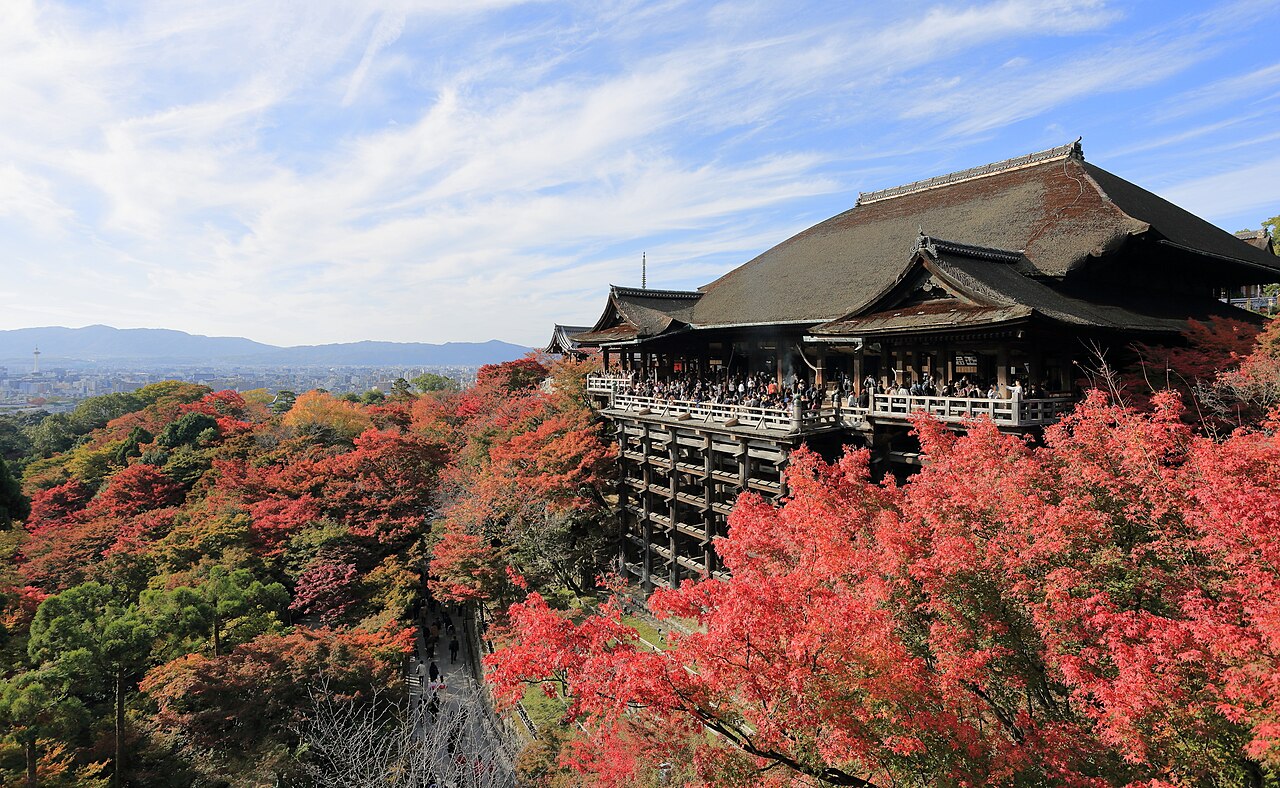
Representative photo illustrating the iconic autumn foliage and architectural heritage that defines Kyoto’s peak November travel season. Photo: Martin Falbisoner / Wikimedia Commons · CC BY-SA 4.0. Resized for display. Sources checked October 23, 2026.