The Operational Pivot: Why Winter Requires a New Baseline
As the calendar shifts from late October into the colder months, the fundamental nature of travel undergoes a distinct change. For the seasoned traveler, this transition is not merely about adjusting a wardrobe; it is about recalibrating one’s operational baseline. Whether you are planning a winter city break or a remote northern expedition, the margin for error narrows significantly. The objective during this season is to move from a reactive posture—where you scramble when a storm hits—to a proactive one.
This shift requires acknowledging that winter conditions are not just local inconveniences; they are systemic events. According to the National Weather Service, winter storms can paralyze major transport hubs, even in regions not typically associated with extreme cold. When your itinerary relies on tight connections or precise arrival times, you are essentially betting against the weather. To build a more resilient travel strategy, you must treat your schedule as a fluid document rather than a fixed contract.
Airport Logistics and Security During Peak Season
The transition into winter coincides with some of the highest travel volumes of the year. The Transportation Security Administration highlights that the most effective way to manage airport stress is to start with an empty bag, ensuring that seasonal gear—which often includes heavy boots, thick coats, and miscellaneous items from previous trips—does not hide prohibited items. This level of preparation is particularly critical during the holidays, when security checkpoints are at their most congested.
For travelers heading to colder climates, packing medication and medical supplies requires specific attention. The TSA allows medication in both carry-on and checked baggage, but they strongly recommend keeping it in your carry-on for immediate access. If you are traveling with liquid medication exceeding 3.4 ounces, you are permitted to bring it, but you must declare it to the officer at the start of the screening process. Do not assume your medical devices or liquids will pass through without additional screening; being prepared to open containers or explain the necessity of these items is part of a mature, stress-free travel strategy.
Airport Preparedness Checklist
- The “Empty Bag” Protocol: Before packing, empty your carry-on completely. This prevents items from previous trips from triggering a security delay.
- Gift Wrapping Strategy: If you are traveling with holiday gifts, avoid wrapping them before departure. Use gift bags or boxes with lids that can be easily removed by security officers if an inspection is required.
- Document Readiness: Verify your Known Traveler Number (KTN) is attached to your ticket before arriving at the airport.
- The Buffer Zone: As discussed in our guide on Winter Transport Needs More Recovery Time, add extra time to your arrival window. Winter operations—such as de-icing aircraft or clearing runways—can create ripple effects that standard schedules do not always account for.
Building Resilience into Your Itinerary
Whether you are chasing the northern lights in Iceland or visiting family, the Ready.gov guidelines emphasize that storms can cut off power and communication for days. A responsible itinerary must account for this reality. If you are planning a trip to a region prone to winter weather, your planning should include a “stay-home” contingency. This means booking accommodation that is comfortable for an extended period, rather than just a place to sleep.
When traveling, always check your destination’s local weather resources. For instance, the Visit Iceland official guide provides context on how to prepare for specific activities like ice cave exploration or geothermal bathing during the winter months. If a winter storm warning is issued, it is often a signal that travel is not just difficult, but potentially dangerous. A resilient itinerary includes a clear “turnaround time” or decision point where you agree to stop moving and seek shelter.
Winter Itinerary Resilience Strategy
- Identify Your “Stay-Put” Option: If you are driving, ensure you have a plan for where to stop if roads become impassable. Do not force a drive to the next destination if weather conditions are deteriorating.
- Understand the Terms: Learn the difference between a watch (possibility of a storm) and a warning (event is imminent or occurring). A warning is a directive to find shelter immediately.
- Emergency Supplies: Even if you are not driving your own car, carry an emergency kit. For road trips, this includes jumper cables, sand, flashlights, warm clothing, and non-perishable snacks.
- Digital and Physical Backups: Keep critical travel documents and offline maps available. In winter, relying on cellular data for navigation is a risk, as cold weather can drain batteries faster and service may be interrupted by storms.
Note: This research-based guide was prepared with AI assistance. No site visits or hands-on tests were conducted. Please verify all travel advisories and local regulations through official government channels before finalizing your plans.
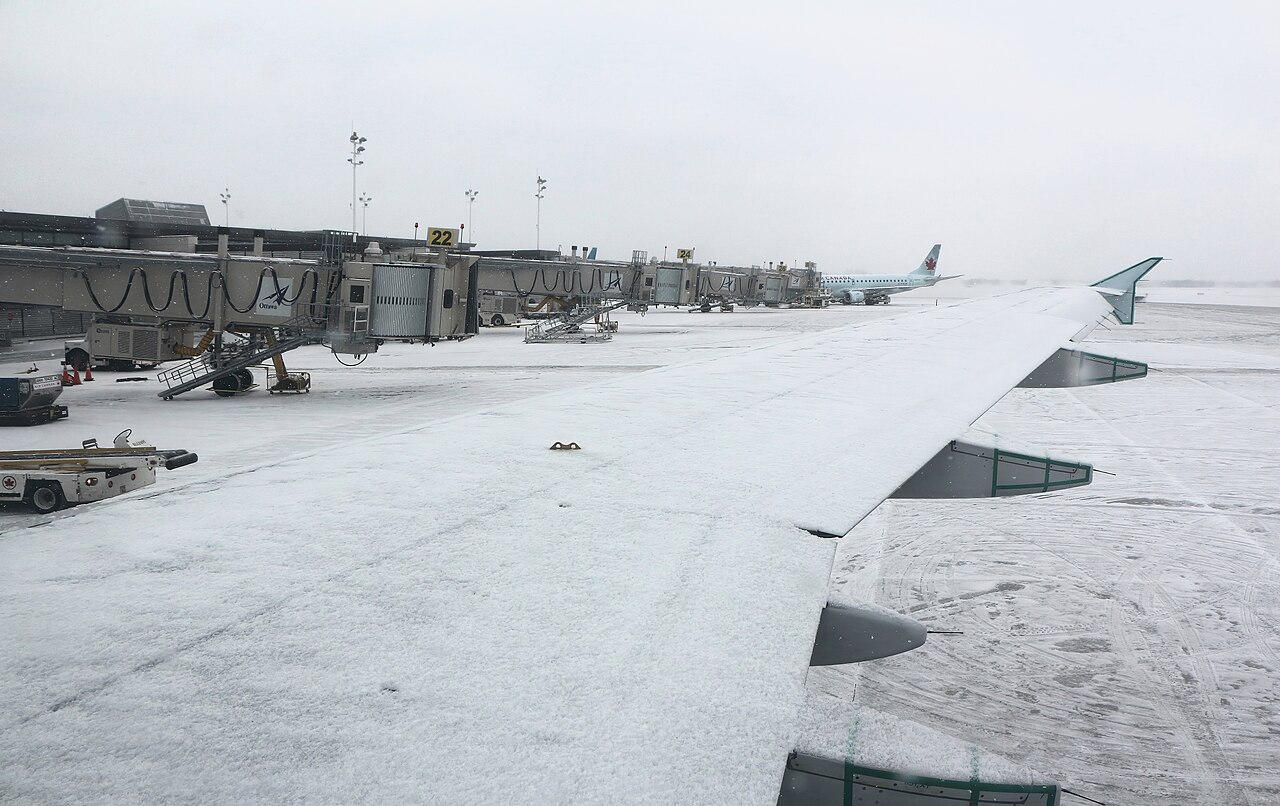
Representative photo highlighting the operational challenges and potential delays caused by winter weather at major transport hubs. Photo: ImagePerson / Wikimedia Commons · CC BY 4.0. Resized for display. Sources checked October 24, 2026.
Advertisement · From our publishing familyDiscover something new ↗