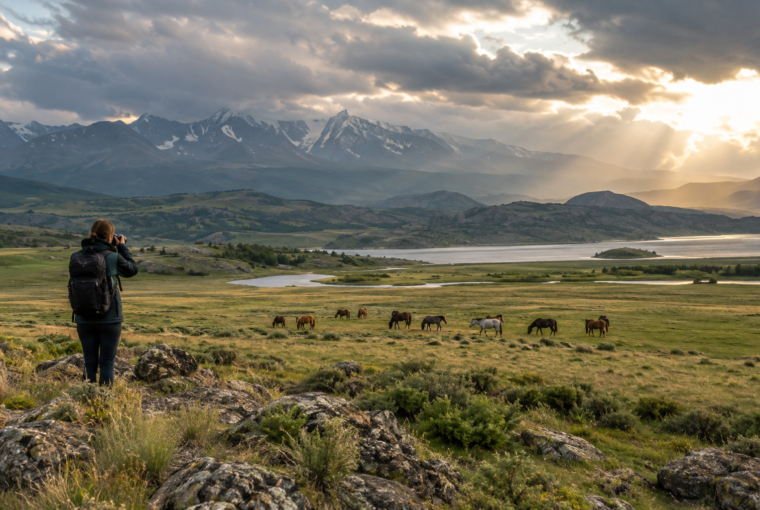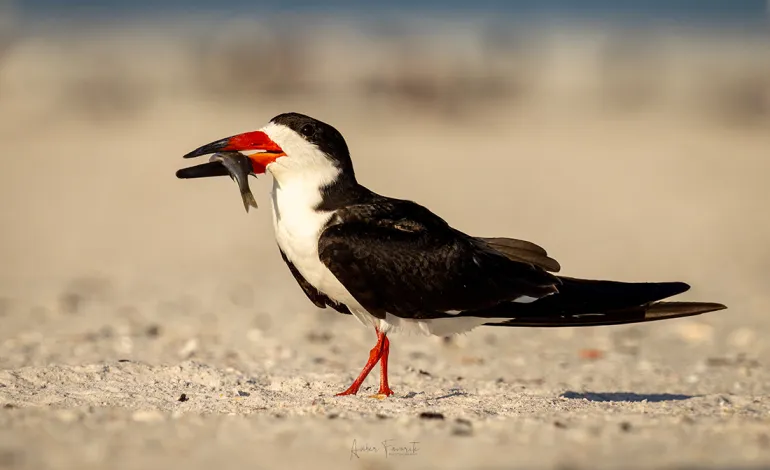
A lower camera position can transform a wildlife photograph. It brings the viewer closer to the animal’s visual world, separates the subject from the background and gives foreground texture a stronger role in the frame.
The technique is valuable only when it can be used without disturbing wildlife or placing the photographer at risk. Distance, terrain and animal behavior should decide the camera position—not the desire for a dramatic image.
Why a lower angle works
Eye-level images can feel more immediate because the viewer meets the subject rather than looks down on it. A low position may also simplify the background and reveal reflections, grasses or shoreline textures that help describe habitat.
Choose the position responsibly
Use a long lens and an established viewing area whenever possible. Never crawl closer, block a path, approach a nest or move between an animal and its young. If the animal changes direction, stops feeding or repeatedly looks toward you, increase the distance.
Before lowering the camera, check tides, unstable ground, insects, traffic, other animals and the ability to leave safely. A tilting screen, ground pod or tripod can lower the viewpoint without requiring the photographer to lie in a vulnerable position.
Let behavior lead
Learn the subject’s normal behavior and wait for an authentic moment. Soft early or late light can add shape, but no light is worth ignoring a closure or crowding an animal. Follow the specific rules of the refuge, park or guide responsible for the location.
A strong wildlife photograph shows both craft and restraint. The most important sign of success is that the subject continues its life as if the photographer were never there.